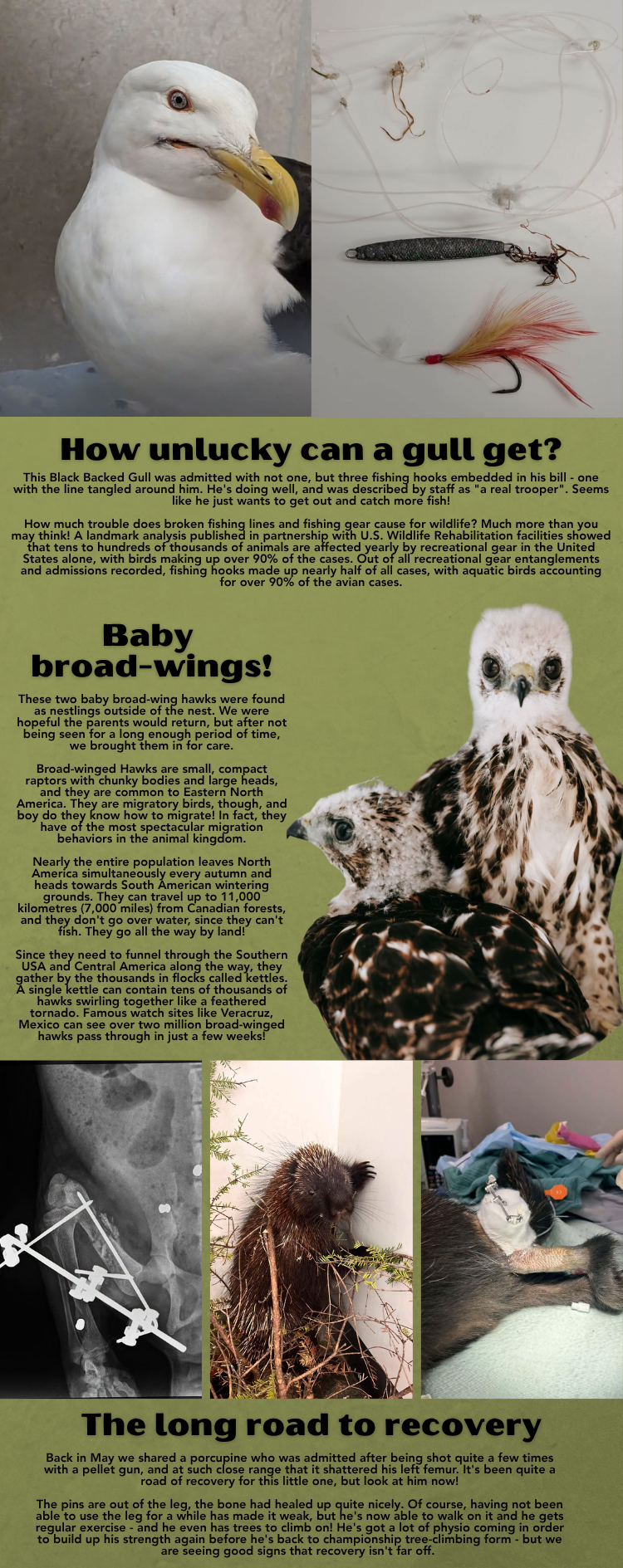
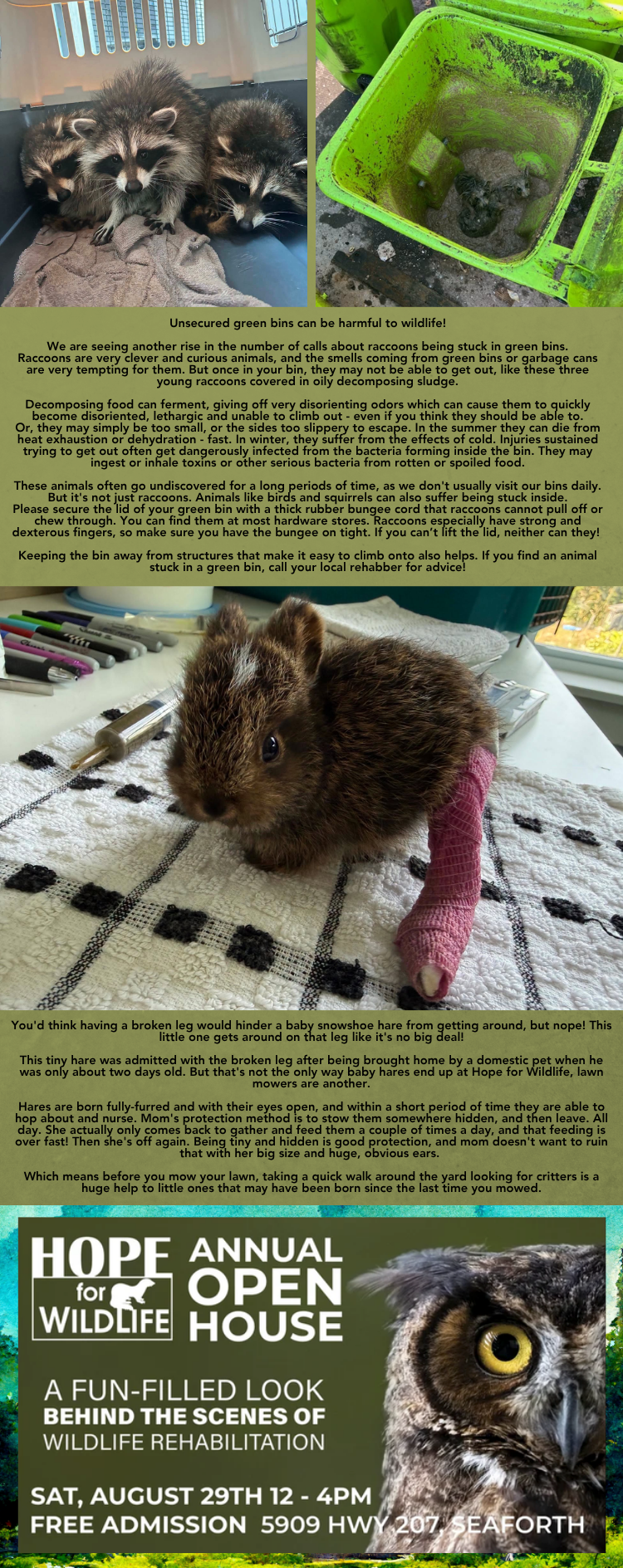
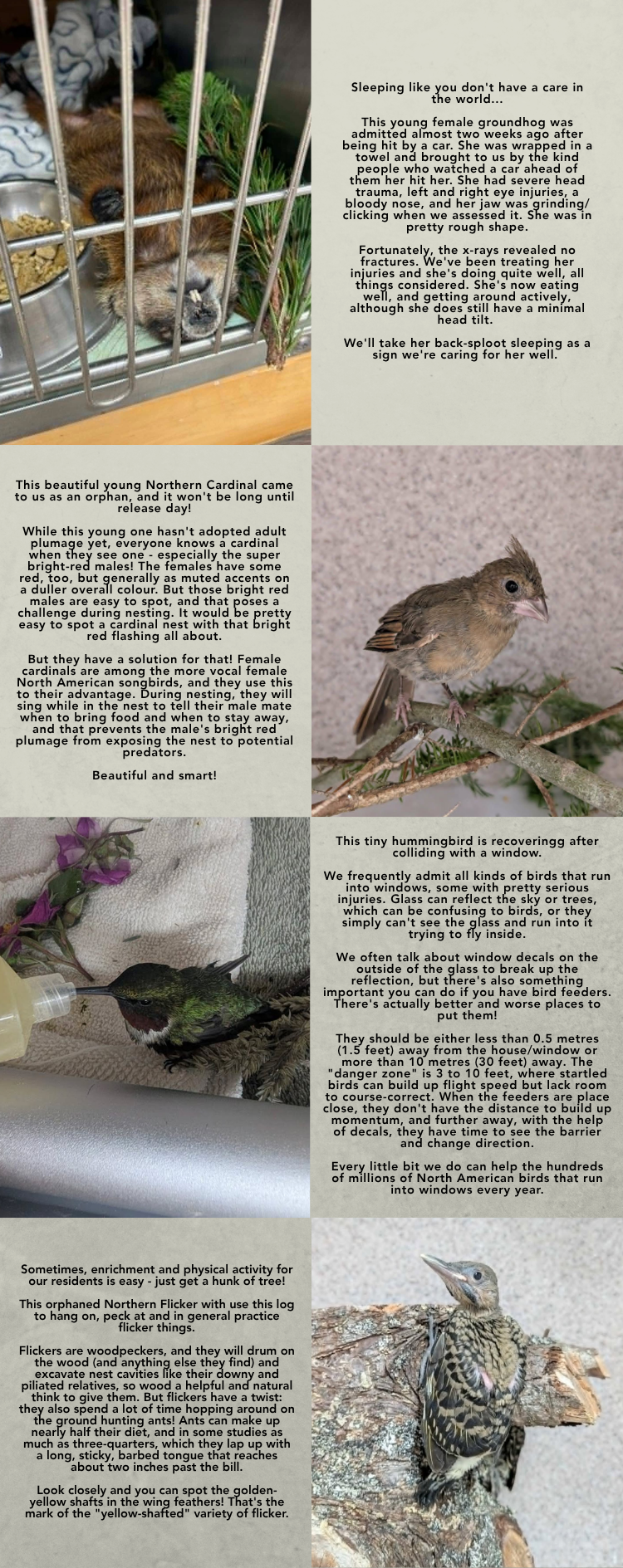
Check Out Some Hope for Wildlife Videos!What you're looking at is this baby skunk very clearly practicing some communication. Skunks don't like to spray, and they only do it as a last resort. While the musk they produce is one of nature's great defense mechanisms, the glands that make it are not very large, and after aggressively spraying it could take a week to replace all that musk, during which time they know they are pretty defenseless. So they only spray as a last resort! But they do tell you when they want to be left alone. Stomping is one way! Stomping basically is a skunk saying "back off". If you don't listen, they may also bluff charge you, hiss at you, or even life their tail and turn around. It's all escalating levels of communication that mean "please go away". Click HERE to see some tiny little skunk stomps! ___________________________________________________________ This little porcupine has come such a long way since arriving at Hope for Wildlife in May with a shattered femur due to being shot with a pellet gun. It’s so wonderful to see him using his leg again and regaining strength! Click HERE to see him enjoying the enrichment in his enclosure! ___________________________________________________________ This mother duck was brought to Hope for Wildlife after being hit by a car. The compassionate person who found her circled back and was able to collect her babies, and they brought them to us! Fortunately, momma duck only had superficial injuries, and after a little less than a week we were able to take them all back home. Fun fact! Only the female mallards make the iconic "quack" sound! Males make quieter, raspier, and breathier sounds, or short whistles. The quack allows mom to gather and guide the young ones. Click HERE to watch the happy family paddle off into the sunset! ___________________________________________________________ These three orphaned crows grew up together in rehab, and they got released together - that way they can support each other as they find a roost to integrate into. Crows that you see in small family groups actually associate in communal roosts at night for social bonding. Communal roosting is standard American Crow behavior, and crows can gather from many miles to form communal night roosts in late summer, fall, and winter, with the size range of a roost being from a few dozen birds up to many thousands, with some roost areas repeatedly in use for well over a century. So our timing is just right - late July is right when roost formation starts! Maybe they'll have a lot of fun stories to tell their new friends. Click HERE to watch three crows return to the wild! ___________________________________________________________ This orphaned osprey is having some lunch. The fledgling was admitted after being discovered very emaciated and weak, and we are doing our best to nurse her back to health so she can be released. Fish make up the bulk of their diet, with some sources noting that depending on where they nest, up to 99% of their diet is fish. And boy do they fish dramatically! They often plunge from heights of up to 30–40 metres (100–130 feet) to catch fish just below the surface, with their fancy fish feet extended and going in first. They kind of have built-in fishing gear. Their outer toe can rotate backward, allowing them to grip fish with two toes in front and two behind for a stronger hold, and the bottoms of their talons have rough projections, called spicules, to help them hold onto slippery fish. Click HERE to see what feeding time is like for this young osprey! ___________________________________________________________
|