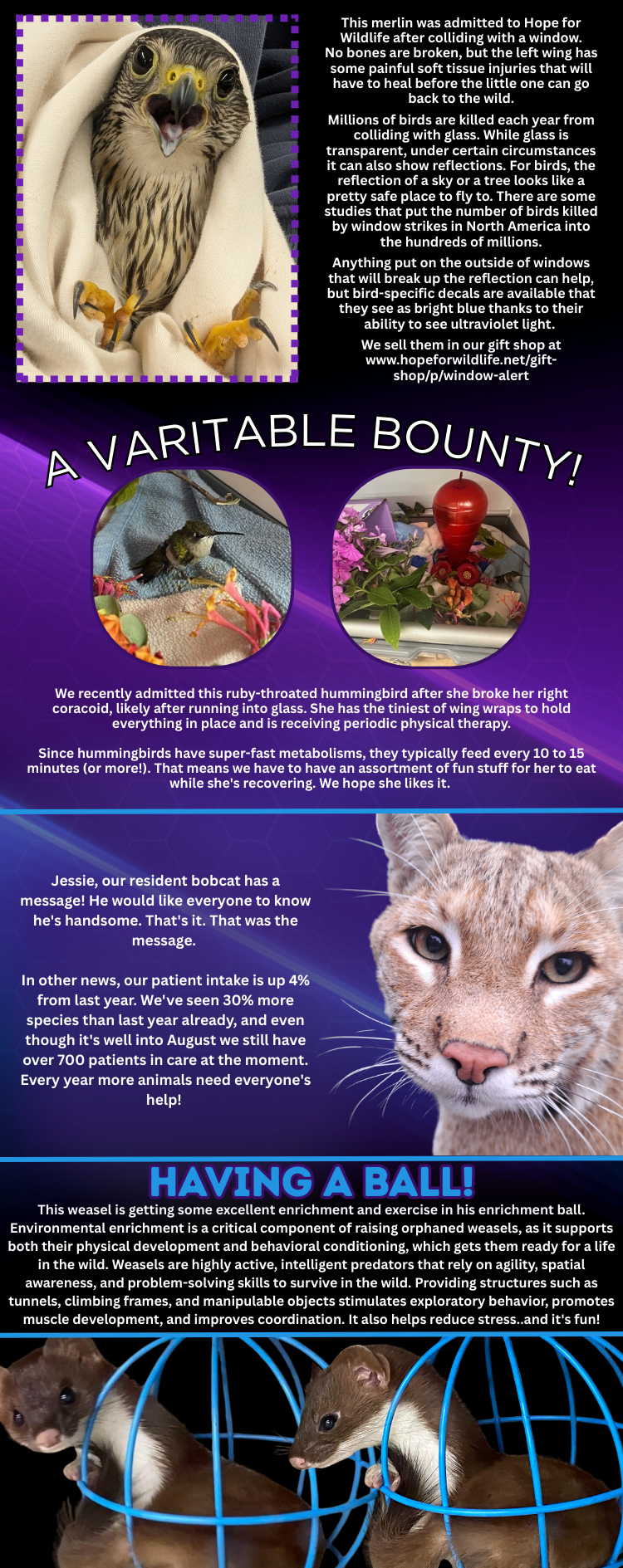
Check Out Some Hope for Wildlife Videos!Way back in May of 2024, an orphaned North American Beaver was found hiding between some rocks. We waited a long time to see if mom would return, but it became obvious that that this little beaver was all alone. It can take up to 18 months to rehabilitate a baby beaver. They stay with mom for a very long time before they become independent, usually not leaving the family until after their second winter together. After 424 days of nibbling, learning, and growing, Munch the Beaver went to her forever home. True to her name, the first thing she does is sample the local cuisine. We scout out and pre-select release sites for beavers because beavers are ecosystem engineers and literally build their own homes. Release site selection is critical to their survival and long-term success. We give them a place of their own, with a good water source, ample vegetation, and building materials. Good luck, Munch - we'll miss you. Click HERE to see Munch released back into the wild! ____________________________________________________________________ Hold on tight! It's breakfast time for our fawns, and boy do they love a good breakfast. We love our feeding racks, they mean we don't have to hand feed them and reduces their contact with us. ____________________________________________________________________ This baby hummingbird was brought in after being found all alone on a golf course, missing feathers on the left wing due to an injury from an unknown cause. She's currently under treatment and enjoying a good meal. Feeding hummingbirds is a lot of work! They typically feed every 10 to 15 minutes and may visit 1000 to 2000 flowers (or more!) per day to find enough nectar and insects to meet their energy needs. Their metabolism is so fast that they need up to a whopping 8 calories a day! Okay, that may not seem much, but when you weigh only around 15 grams, it's the equivalent of a human consuming about 155,000 calories per day. That's around 500 hamburgers! ____________________________________________________________________ Here in our neck of the woods, we are experiencing a hot, dry summer. We make sure all of our patients are extra hydrated and have appropriate water to be able to bathe and cool off in. We’ve been getting calls about the animals that live in the wild - do they need help? Usually, wildlife is fine without water being provided by people, but in a drought if you do want to give a bit of help, you can put out a little water as long as you make it safe for them! - Use shallow, clean dishes (e.g., plant saucers, not bowls). - Place them in shady, quiet areas that have good cover. - Add rocks or sticks so smaller animals (like bees or frogs) can climb out. - Change the water daily and clean the dish to avoid disease forming or mosquito breeding. - Keep them out of reach of domestic pets. ____________________________________________________________________ We have two orphaned Eastern Meadow Voles in care at the moment. They are primarily herbivores, and this little one sure does like his flowers! Since they eat every 2 to 3 hours, we make sure we have a good supply on hand. ____________________________________________________________________ When we moved an orphaned raccoon to one of our outdoor enclosures, the official raccoon welcoming committee wasted no time going over to meet the young new resident. While raccoons are generally solitary in the wild, they form tight family units when they are young, and it's very common to see all of our orphaned raccoon patients sleeping together in a big pile during the day. ____________________________________________________________________ These baby red squirrels were admitted to us last week after their nest was disturbed during construction. We waited to see if mom would come back and gather them up, but unfortunately she didn't return. For the next few weeks, we're mom! Then they will grow up with our other squirrels in an outdoor enclosure. ____________________________________________________________________ When you have to feed up to 7000 patients a year, you learn to be efficient! Nutrition is a huge part of what we do - every animal has to eat, often multiple times a day, so the kitchen is always open. We have about 700 patients in care right now, so that's a ton of meal prep, food delivery, and dishwashing - by hand! ____________________________________________________________________
|