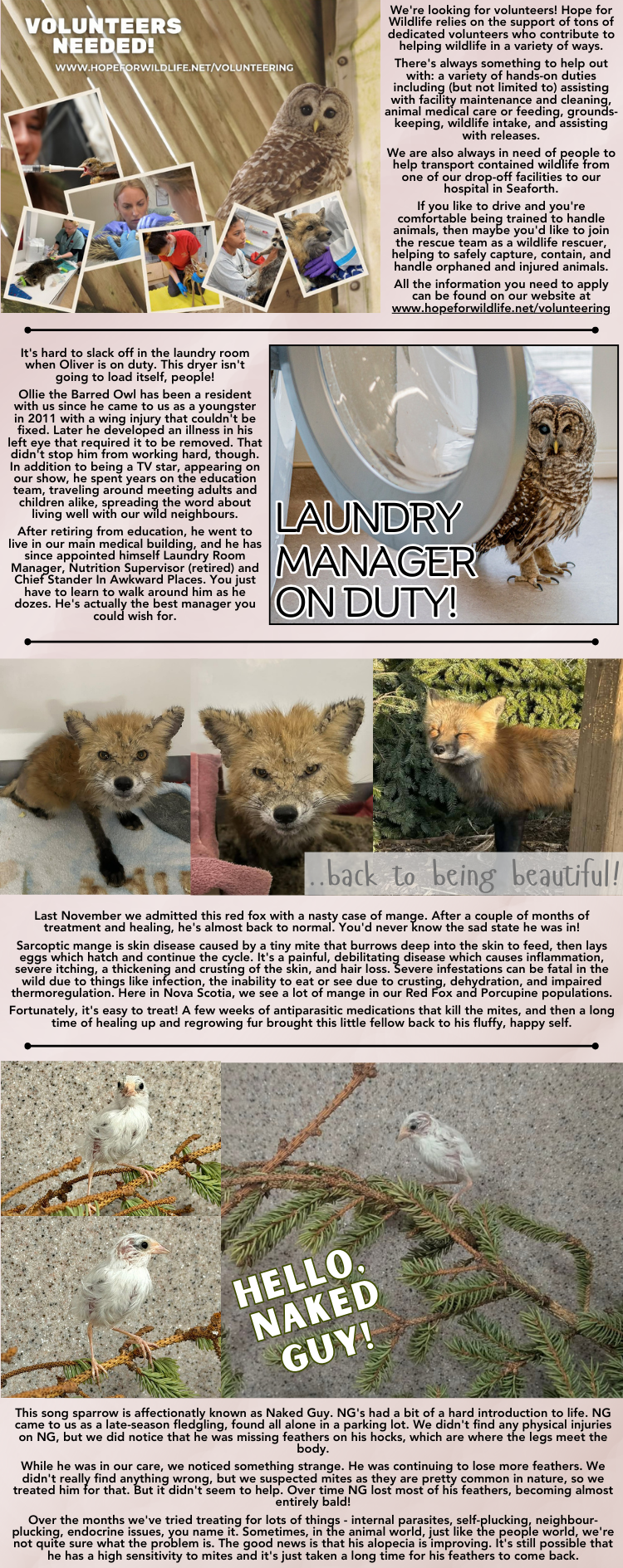
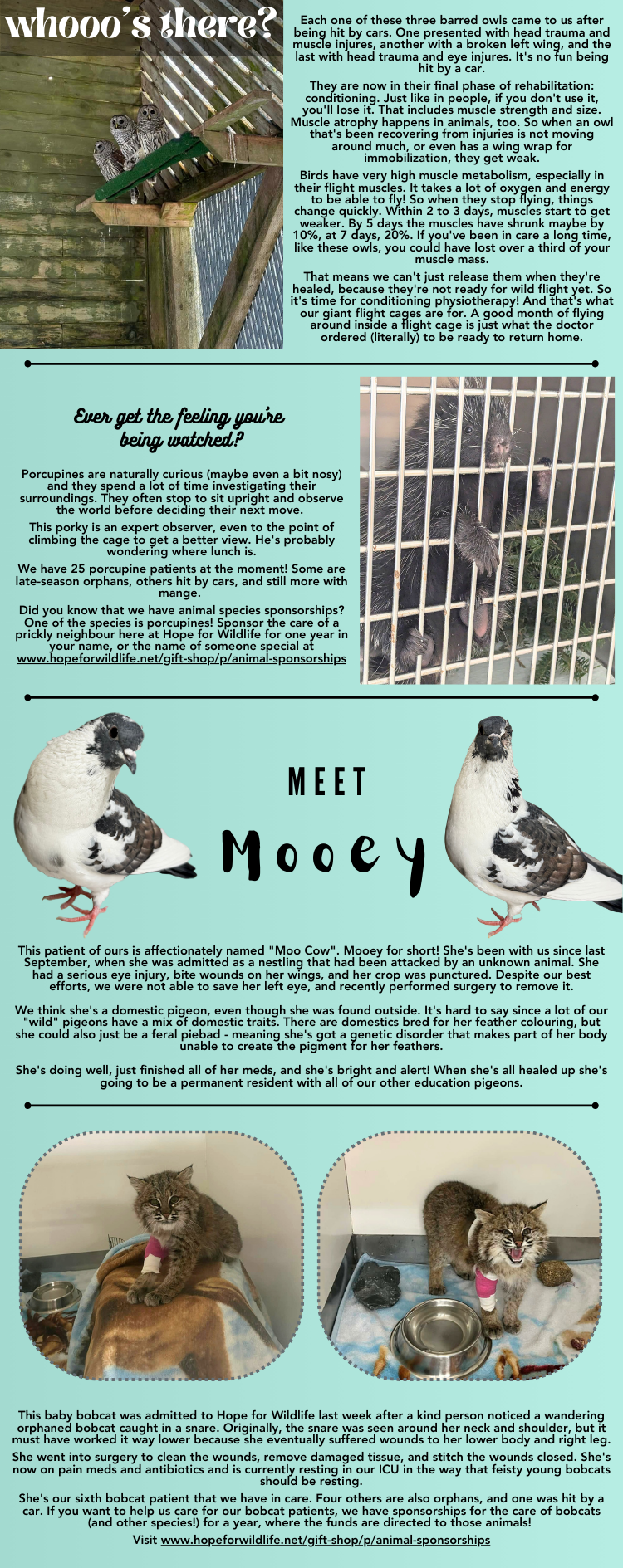
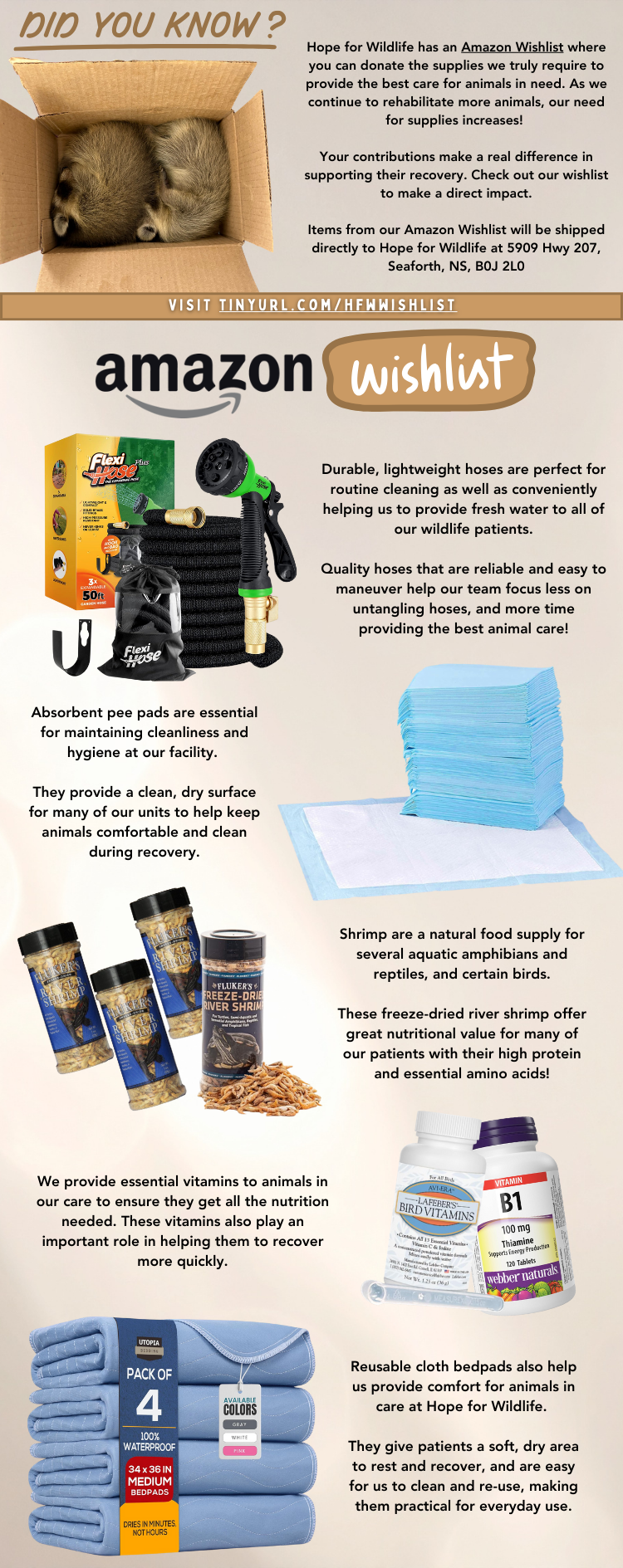
Check Out Some Hope for Wildlife Videos!Wanna see how we feed baby pigeons? Looks odd, doesn't it? The baby pigeon is feeding out of a large syringe that we put latex cover over and with a hole cut in it. Why you might ask? Great question! In the pigeon world, mom and dad don't bring home food for the young ones to eat. Instead, they both produce a kind of "milk" in their crop. The crop is an expanded, pouch-like part of their esophagus used for the temporary storage and softening of their food. In pigeons and doves, when they have babies the crop's lining changes and it becomes specialized to produce crop milk. The baby basically sticks its beak right down in there and has dinner. It's what they instinctively know how to do, so we need to mimic that setup. It's not milk in the mammalian sense, though. It is made of sloughed-off, lipid- and protein-rich epithelial cells from the lining of the crop, mixed with water and digestive enzymes. Yum - everything a growing pigeon needs. We use a formula specifically designed to replicate the nutrition and texture of the crop milk. ____________________________________________________________________ This porcupine has returned home after spending a few months with us recovering from mange. Did he look back to say goodbye? We hope so. Maybe he just didn't want us following him so his favourite tree would stay a forest secret. Hard to know! We often get asked if we release animals back where they were found. We do our very best to - for a lot of reasons. It's often important that they go back to their familiar habitat, food sources, and territory. It's the place they know and understand how to live in. Some animals mate for life, so maybe they have a mate there waiting for them! And off course, the local ecosystem depends on them, too, because the lifelong effects of even a single animal can be huge. When an animal is brought to Hope for Wildlife, in a very real way that's only half of their incredible journey. Once they are healed up, no matter how many hours away they've come from, our dedicated team of volunteers also have to make sure that they get back home again. ____________________________________________________________________ A meal fit for a skunk! Striped skunks are opportunistic omnivores, meaning not only do they eat both plants and animals, but they eat whatever they find and they can easily role with what changes by season and availability. Insects, grubs, mice, frogs, eggs, berries, roots are a big part of their diet. Does that mean we can feed them whatever? Nope. For animals healing or growing, we still need to manage their nutritional balance using high-quality foods - either exactly what they eat in the wild or as close to it as we can get. And make sure we track their caloric intake properly.
|